
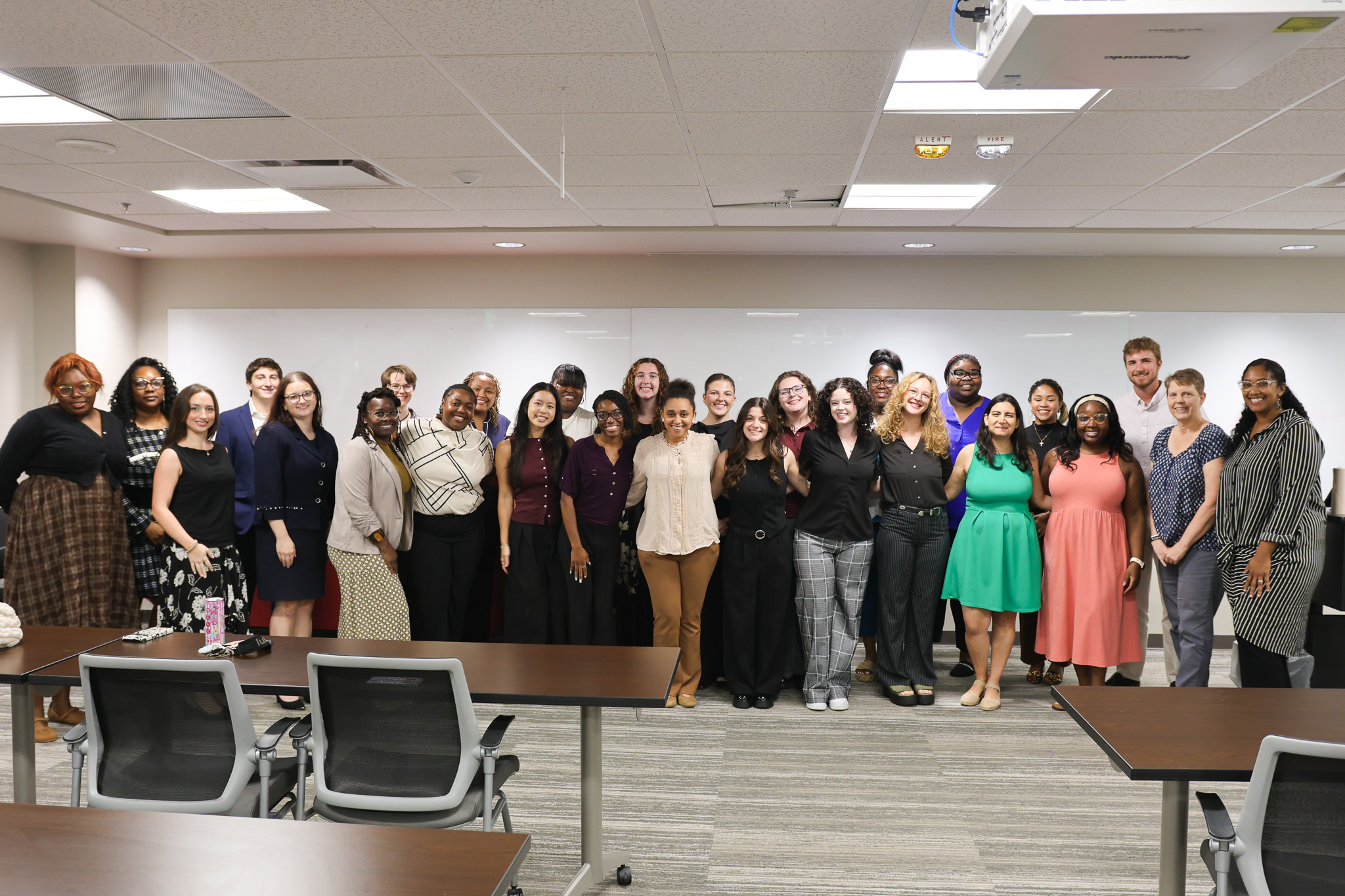
Master of Social Work (MSW) students in The University of Alabama School of Social Work are partnering with the West Alabama Cardiac Health Program (WACH) to explore barriers to healthy food access and develop recommendations that support healthier communities across West Alabama.
The project continues the School’s Food as a Human Right campaign, led by instructors Jade Scales and Dr. Luciana Giorgio in collaboration with Dr. Amie Brunson and the WACH team. Throughout the summer, students have visited agencies and rural communities to better understand the challenges individuals face when accessing and consuming fresh fruits and vegetables.
Building on previous work with Jeremiah’s Garden, students are tracking fresh produce donations to community agencies while conducting community assessments and engaging with local organizations. At the conclusion of the project, students will present evidence-based social work recommendations to the WACH team for consideration as future additions to its programming.
WACH is a Centers for Disease Control and Prevention-funded initiative that serves nine West Alabama counties to reduce cardiovascular disease by addressing the social and environmental factors that influence health.
“Everyone knows they should eat right and exercise, but that’s not changing outcomes,” said Dr. Sharlene Newman, executive director of the Alabama Life Research Institute and principal investigator for WACH. “Our goal is to understand what the barriers are to health and work with communities to remove those barriers.”
Newman said the partnership provides valuable experiential learning opportunities by allowing students to work directly with communities across rural Alabama while learning from local leaders and residents.
For Brunson, the collaboration bridges the gap between classroom instruction and professional practice.
“It allows students to move beyond textbook knowledge and see how the decisions they make can directly impact people’s lives,” Brunson said. “Being immersed in communities gives them the opportunity to connect social work values, ethics and competencies to real experiences while amplifying the voices of those they serve.”
The partnership also includes faculty and students from the Department of Human Nutrition, creating an interdisciplinary approach to addressing food access and community health. Dr. Linda Knol, a WACH nutrition specialist, said working directly in rural communities helps students better understand the realities many families face.
“Students gain a much deeper understanding of food justice when they see firsthand the resources available—or unavailable—in rural communities,” Knol said.
Tiffany Gray, project coordinator for WACH, emphasized that strong community partnerships are essential to the program’s success and to creating lasting change across West Alabama.
“We work closely with local organizations, community groups, faculty and students across the University,” Gray said. “Those partnerships allow students to apply what they are learning in the classroom while helping us better understand community needs and improve our programs.”
Gray noted that the collaboration benefits both students and communities by bringing additional research, education and outreach capacity into rural areas that often have limited resources. She said these partnerships contribute to the broader well-being of Alabama communities by strengthening local networks, supporting community-based services and helping identify strategies that can improve long-term health outcomes.
“The overall vision is the betterment of Alabamians through health, education and well-being,” Gray said. “When universities and communities work together, we can create opportunities that have a meaningful impact for families across West Alabama.”
Through community engagement, interdisciplinary collaboration and applied learning, the partnership equips future social workers with practical experience while supporting WACH’s mission to improve health outcomes throughout West Alabama. As students complete their community assessments this summer, their recommendations will help inform future strategies to expand access to nutritious food, strengthen community partnerships and support healthier communities across the region.